Introductory Psychology Open Course: Unit 5
Learning Theory & Behaviorism
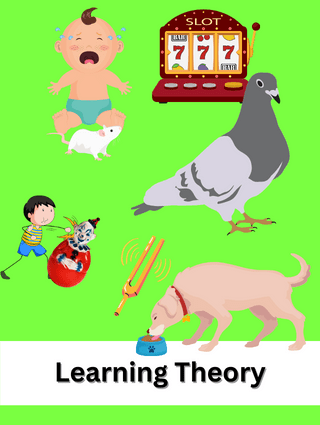
In this unit we'll look at approaches which defined learning as a change in behavior brought on by experience. This focus on observable behavior was a dominant approach in research in the first half of the 20th century and can be seen as an attempt to make psychology more objective. Research focused on how we form associations between stimuli and how behavior is influenced by consequences, and minimized the role of internal mental states. By the second half of the 20th century, however, the limitations of this approach became more apparent, leading to the "cognitive revolution" that followed, which will be addressed in the next unit.
The basic principles of classical conditioning
The duration and specificity of learned associations
Forming negative associations with stimuli
Basic principles of operant conditioning
Skinner's operant boxes & measuring behavior over time
More complex behaviors & the problem of instinctive drift

The Premack principle and motivations for behavior

The Rescorla-Wagner model & the role of attention
Learning from others & vicarious reinforcement
Tolman's research & internal mental representations
The role of mental models in generalizing & problem-solving

Additional Resources: